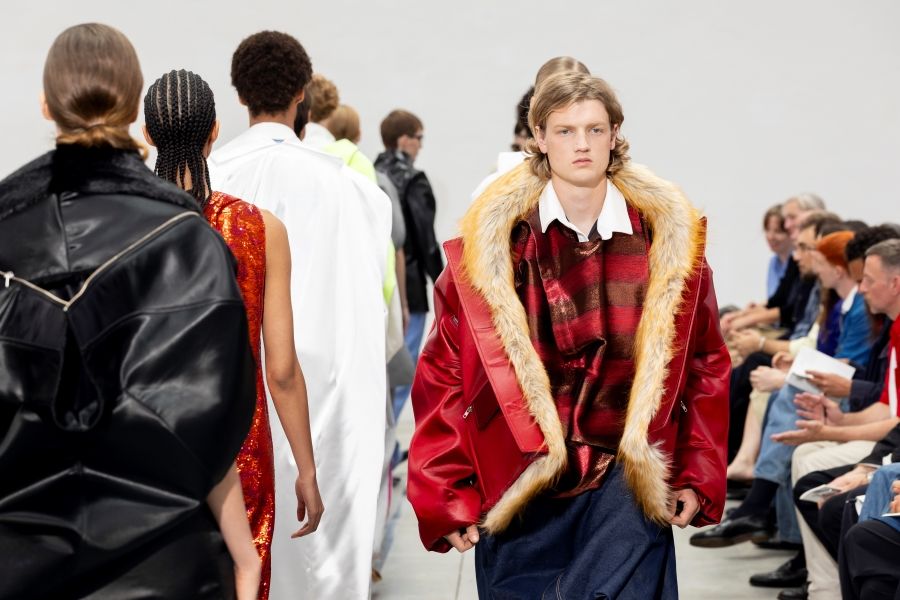
With a show held for a very small audience, one of the world’s leading fashion schools celebrated its 40th anniversary last week – and unveiled yet another generation ready to step into the future.
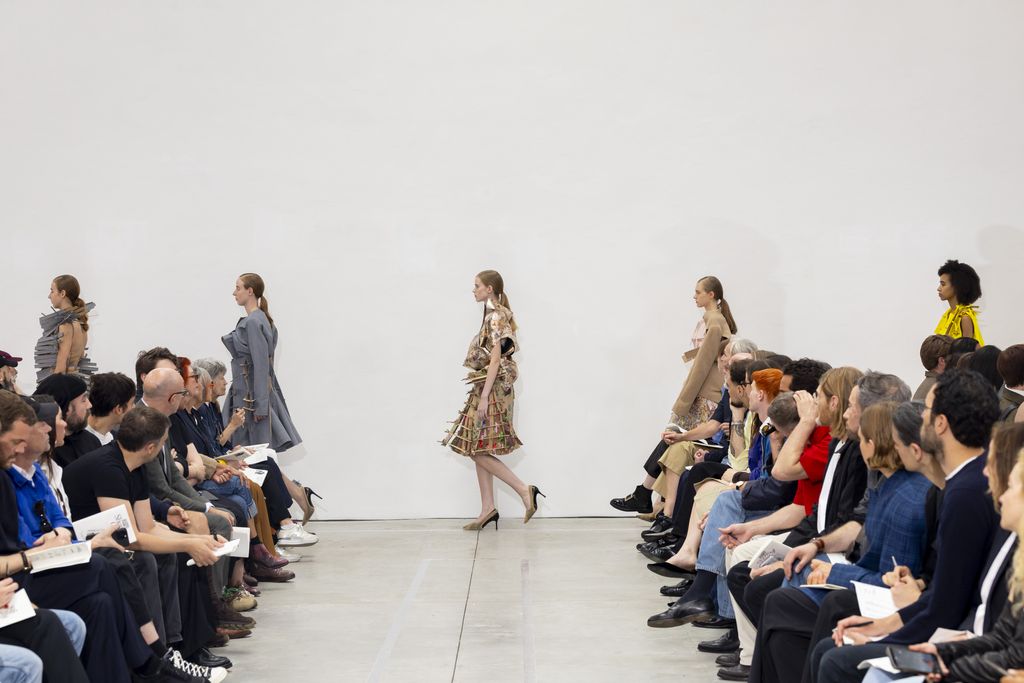
Has the La Cambre approach to fashion education paid off? The front row said it all. To mark the 40th anniversary of the Brussels-based fashion programme, the school invited its children home.
The result was that students from La Cambre Mode[s]’s two Master’s years presented their work to a remarkable jury of alumniwho now help shape the international fashion landscape. Watching the creations move down the runway were Matthieu Blazy (Chanel), Anthony Vaccarello (Saint Laurent), Julian Klausner (Dries Van Noten), Julien Dossena, Nicolas di Felice, Olivier Theyskens, and independent designers such as Marine Serre, Marie Adam-Leenaerdt, Cédric Charlier and Louis Gabriel Nouchi to name just a few. Different generations, different careers, yet all formed by the same Brussels method: a fever dream of an entrance examination that lasts an entire week, followed by five years during which technique and dedication become the tools with which each student develops a distinct creative signature.
A rarity
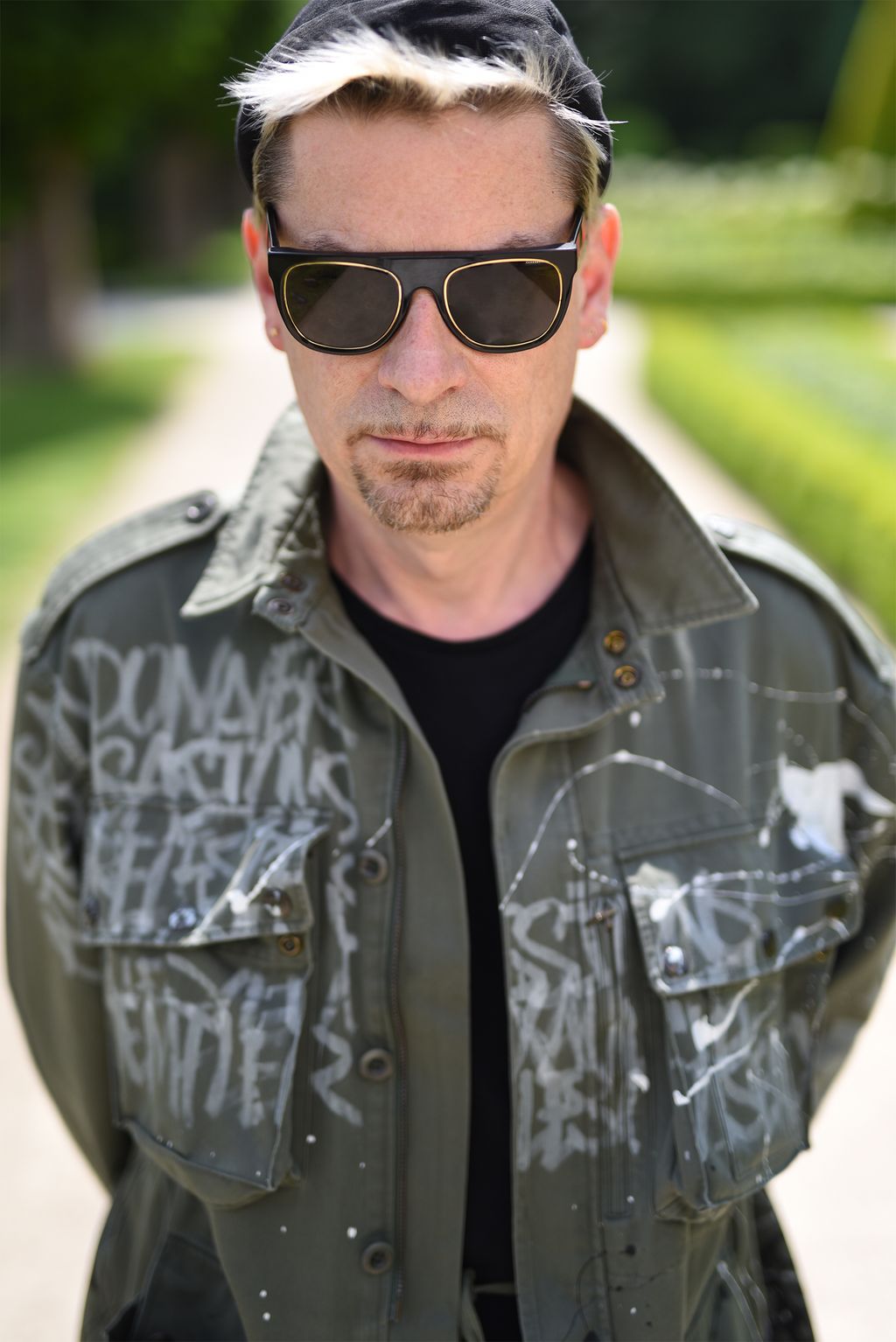
If Brussels once stood in Antwerp’s shadow and that of its fashion giants*, La Cambre’s fashion department has, at its own pace and on its own terms, grown into one of the most influential schools in the world. Notably, both institutions remain public schools, charging Belgian students standard tuition fees; a rarity among their international counterparts.
The system put in place over the years by director Tony Delcampe and fashion professor Pierre Darras is one that demonstrably works. Its strength, according to the head of department, lies in deliberately keeping its distance from the visual inflation that dominates the outside world. “We stay well away from mood boards. Every photograph of another garment is ultimately a reworking of something that already existed.” The aim here is to break free from that cycle. As a result, student designers draw inspiration from art, culture and wider creative disciplines rather than from what is ‘fashion-fashion’.
Staples and rough textiles
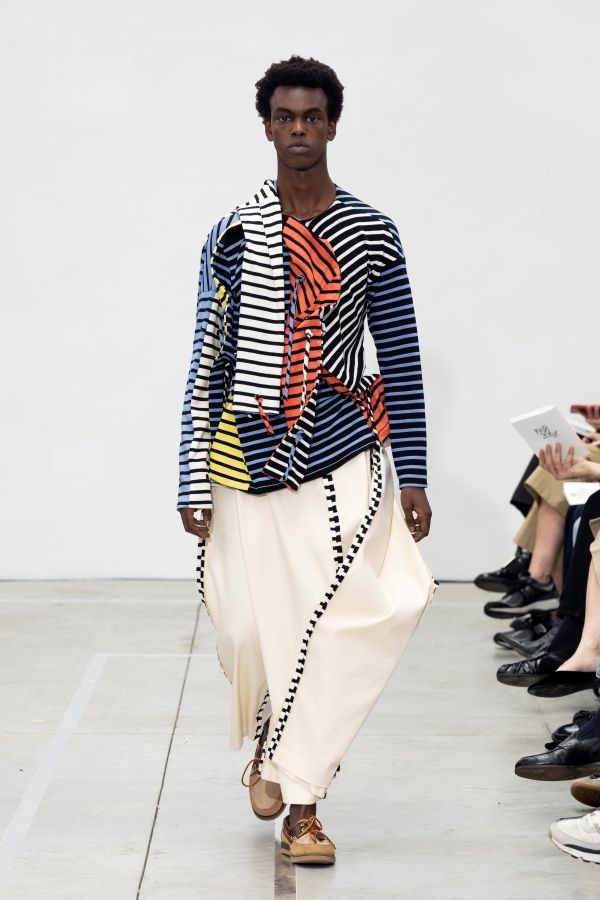
In the first Master’s year, this brief takes shape through experimental garments that function more as presentations of research than as conventional collections. Thierry Brassard presented an exploration that began with the idea of clothing as furniture – think staples, rough textiles and wooden frames. Eva Percy deconstructed everything associated with the marinière, creating garments that lay on the floor as perfectly flat forms. Gaspard Lasne’s I Sat On Something That Reminded Me of You incorporated rattan chairs that gradually dissolved into woven garments.
By the second Master’s year, the culmination of the five-year programme, students translate the ideas in their minds through the savoir-faire they have spent years acquiring.
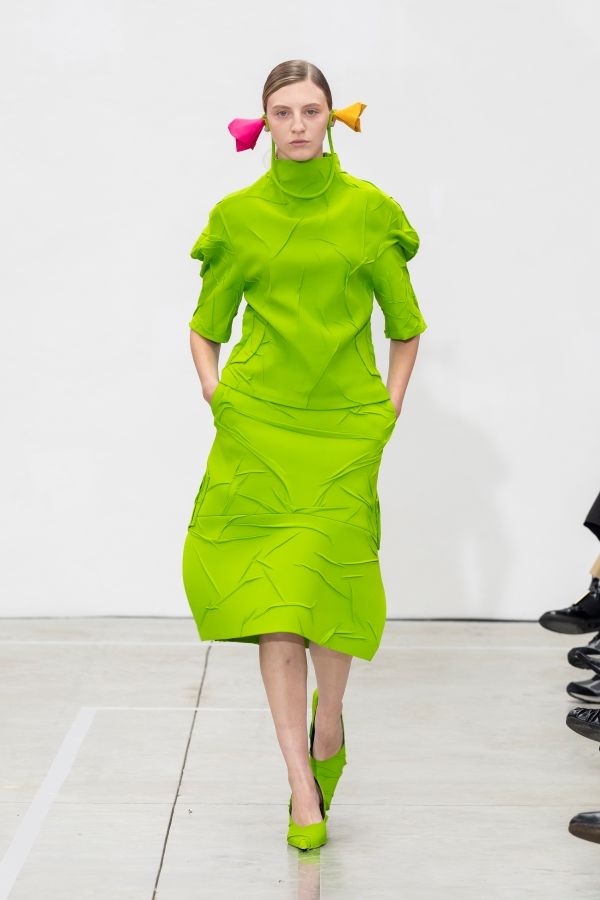
No moodboards
Forget fashion. Study other processes and begin with what does not come from fashion,” Delcampe tells his students. “There are no mood boards, because a mood board is simply a recycling of someone else’s work. So they work without them, and everyone starts from a different place. We don’t want to make fashion for today. We want to make something entirely different.
In the architecturally constructed garments with wood veneer by Theodora Hadj Noussa Lauble, references to Gordon Matta-Clark surfaced throughout. Manon Schied wove the spirit and message of Zoe Leonard’s revolutionary poem I Want a President into her work. Lalou Weyrich played with codes of femininity and florals, while Alexandre Piron transformed Playmobil into an unexpectedly credible source of inspiration. To name just a few examples. Equally impressive was the modular thinking underpinning Fantin Delattre’s collection.
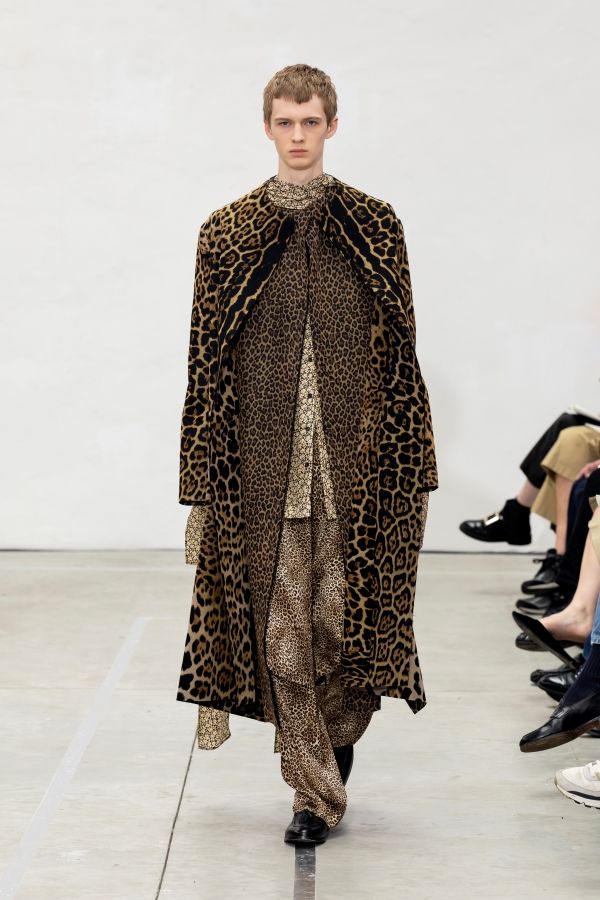
At times, while watching the silhouettes pass by, it is easy to forget just how young these students are. Marie Scerri blew the audience away with her eye for constrasting fabrics, cuts and surprise backsides. Her last silhouette, many voices agreed, almost did the unthinkable: showing a new approach for overused prints of leopard and snake. Over the course of five years, these student learn not only how to build a collection, sew, draft patterns and bring them to life; pushed ever further by their tutors, they also emerge with a creative language of their own.
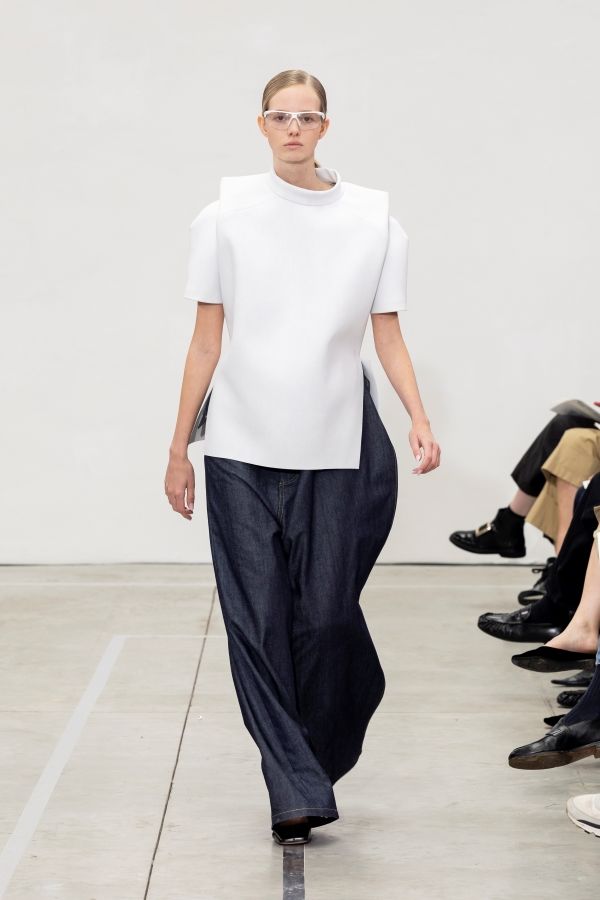
No products
“We never talk about products. They’ll spend the rest of their lives doing that,” says Pierre Darras, who teaches fashion design across both the Bachelor’s and Master’s programmes. “The aim is that, over five years, students build up a reserve — a vocabulary they can draw from for the rest of their lives.” And, in the process, a family that often lasts just as long.
In its communications, La Cambre Mode[s] describes itself as a close-knit community of friends and family. Such language can easily feel like window dressing. Here, it does not. Not with a show staged in an ultra-intimate setting, accompanied by thunderous applause, tears welling up with emotion and affectionate hands resting on shoulders. Not with relieved students finally able to enjoy their Belgien fries and mayonaise with a flute of champagne afterwards, while a spontaneous musical polonaise snakes through the industrial show space: a new generation dancing its way towards the future.
*The Fashion Department of the Royal Academy of Fine Arts of Antwerp