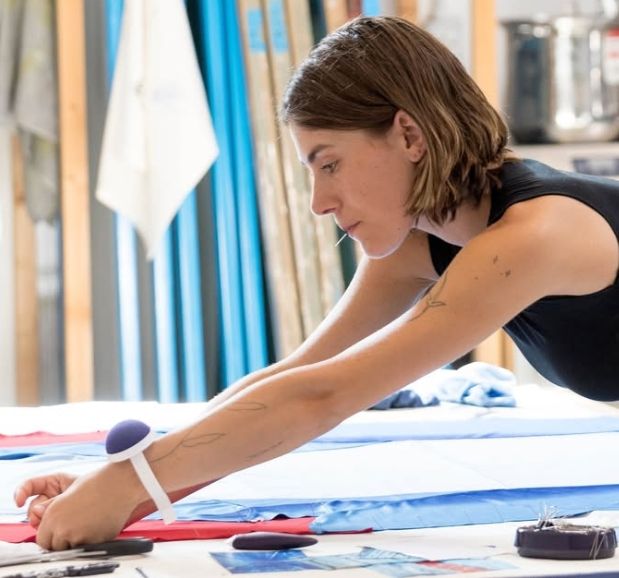
How a residency at Lottozero in Prato (Italy), supported by the Culture Moves Europe programme, enabled Brussels-based textile designer Isabel Wolfs to undertake a long-term research project that has now taken her to Paris with the project A New Sport Language.
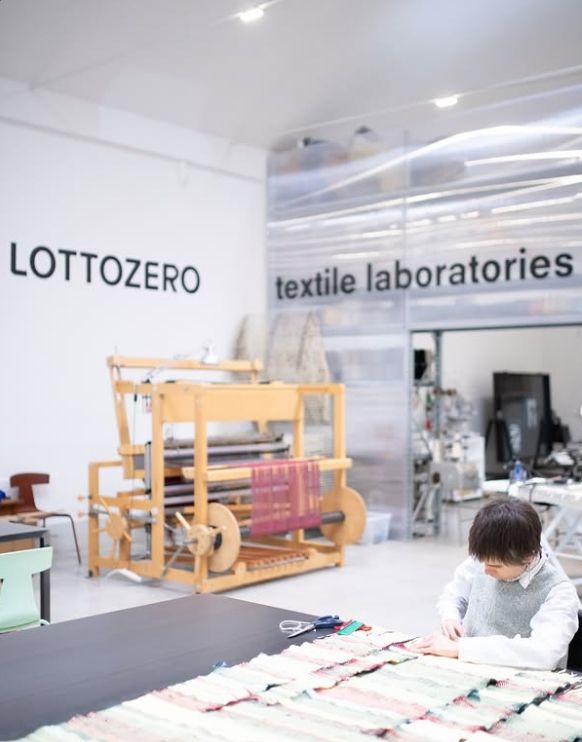
Founded by Isabel Wolfs, a Brussels-based textile designer, Studio Wolfs develops a practice at the crossroads of textile research, craftsmanship, fashion and sustainable design. In 2024, thanks to a grant from the Culture Moves Europe programme, she undertook a residency at Lottozero, a textile research centre and laboratory based in Prato, Italy. This experience enabled her to deepen her research whilst immersed in a unique textile ecosystem and to develop new collaborations across Europe.
With the Culture Moves Europe programme information session, scheduled for 30 November 2026, fast approaching, we asked her to reflect on her experience and share some advice with designers considering submitting an application.
How did you find out about the ‘Culture Moves Europe’ programme?
I can’t remember exactly how I came across this programme, but someone recommended it to me whilst I was looking for funding to organise my first residency. I’d already spotted the place I wanted to go to and was actively seeking resources to make this project a reality. When I came across the call for applications, it seemed like the perfect opportunity.
What did your project involve?
I wanted to join a textile laboratory in Italy specialising in experimentation and research. For me, this choice was a natural one: it’s the heart of the European textile industry, with direct access to expertise, workshops and factories that you don’t find everywhere.

Finding a partner is a key part of the programme. How did you find yours?
I found them through recommendations and some preliminary research. For me, this is undoubtedly one of the most important aspects of the application. I strongly recommend finding a partner before you even start putting together your application. You need to know why you want to work with that particular organisation, what it can bring to the project and why this collaboration is relevant. The programme doesn’t just fund a trip: it supports genuine international collaboration.
What did this mobility experience actually bring you in practical terms?
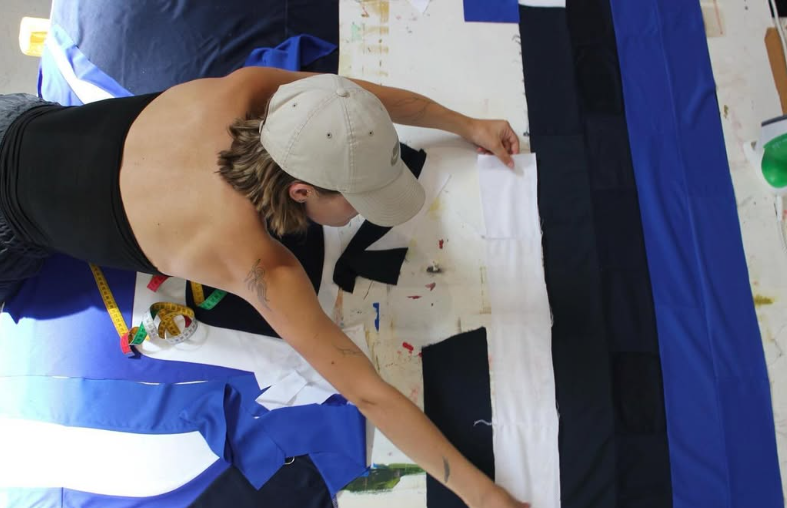
A great deal. I’d studied textiles during my training, but this residency allowed me to observe industrial processes at close quarters, visit factories, work in a laboratory and engage directly with specialists in the sector.
I am genuinely convinced that my practice would not be the same today without that first residency. Since then, I have returned to that organisation several times and still visit regularly. It has opened up a whole professional network to me that I would not otherwise have had access to.
Has your creative vision evolved as a result of this experience?
Yes, absolutely. I had worked for several years in the footwear industry after studying fashion and pattern-making. This residency has enabled me to gradually return to clothing and textiles.
The research I began in Italy now forms the basis of a project spanning several years. It has already led to a first exhibition in Brussels and is now feeding into A New Sport Language, a multidisciplinary project developed with the photographer Yana Van Nuffel, which pays tribute to women in sport through circular design and visual storytelling. Following an initial presentation in Brussels, the project will be exhibited at the Galerie Joseph in Paris from 25 to 29 November 2026, to coincide with the launch of an art book dedicated to it.
When I look back on this journey, I can clearly see a link between these developments and my experience of mobility.
Did you find the application process complicated?
Not particularly. Compared to other funding schemes, I find the process quite straightforward.
The main challenge is to be concise. Answers need to be short but impactful. I asked someone with a flair for writing to proofread my texts to clarify my arguments. That’s a piece of advice I’d be happy to pass on to future applicants.
Are supporting documents, such as the portfolio, important?
Yes, definitely. The portfolio and CV help to put the project into context and show why you are the right person to carry it out. They help to demonstrate the consistency between your background, your practice and the proposed mobility.
And what about the administrative burden?
Honestly, I find it reasonable. You have to submit a final report, but it’s really just an illustrated account of what you’ve achieved during the mobility period.
Compared to other European or national grants, it’s relatively light.
Is the funding sufficient to carry out a project?
It depends on the project and the host organisation. In my case, the residency involved numerous costs relating to support, travel and textile research. I therefore had to supplement this funding with my own resources.
But this support remains essential: it enables the project to get off the ground and makes possible an experience that would often be difficult to fund otherwise.
What advice would you give to a creative person who is hesitating to apply?
First and foremost, I would advise them to write a clear, concrete and sincere proposal.
It’s not enough simply to want to travel. You need to be able to explain why this mobility opportunity is important for your development, why this partner is relevant, and what you genuinely hope to achieve during your stay.