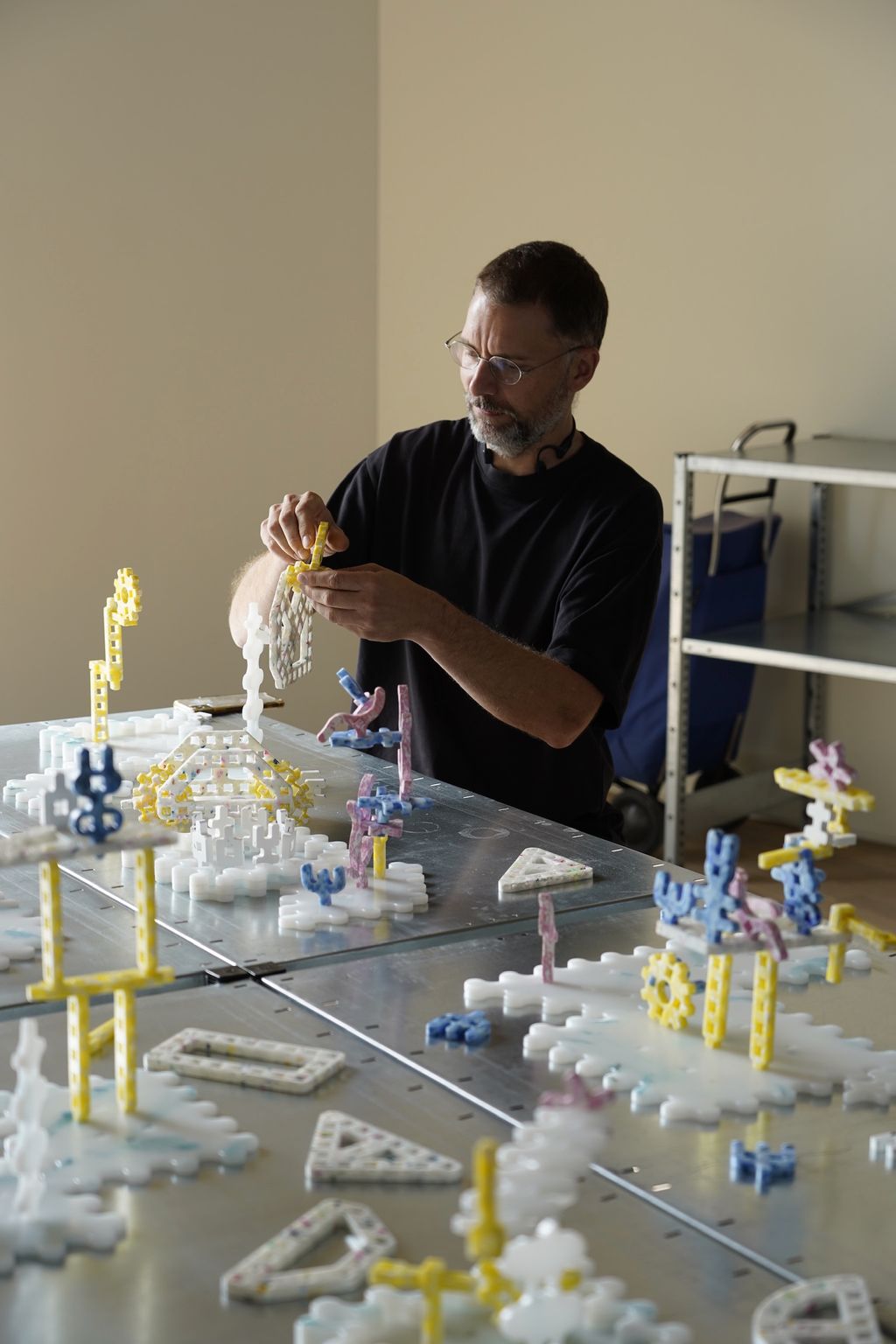
A few days before the opening of Connect, one of the exhibitions celebrating the reopening of the Design Museum in Ghent after a long period of renovation and expansion, David de Tscharner talks about his participation in this event, whose name seems to have been conceived especially for him, as well as the journey he has taken since the launch of Combo Toys, a hybrid project somewhere between recycled, gender-neutral and locally made toys, collectible design and contemporary art.
When you founded Combo Toys in 2023, did you want to create a toy, a design object or a teaching aid?
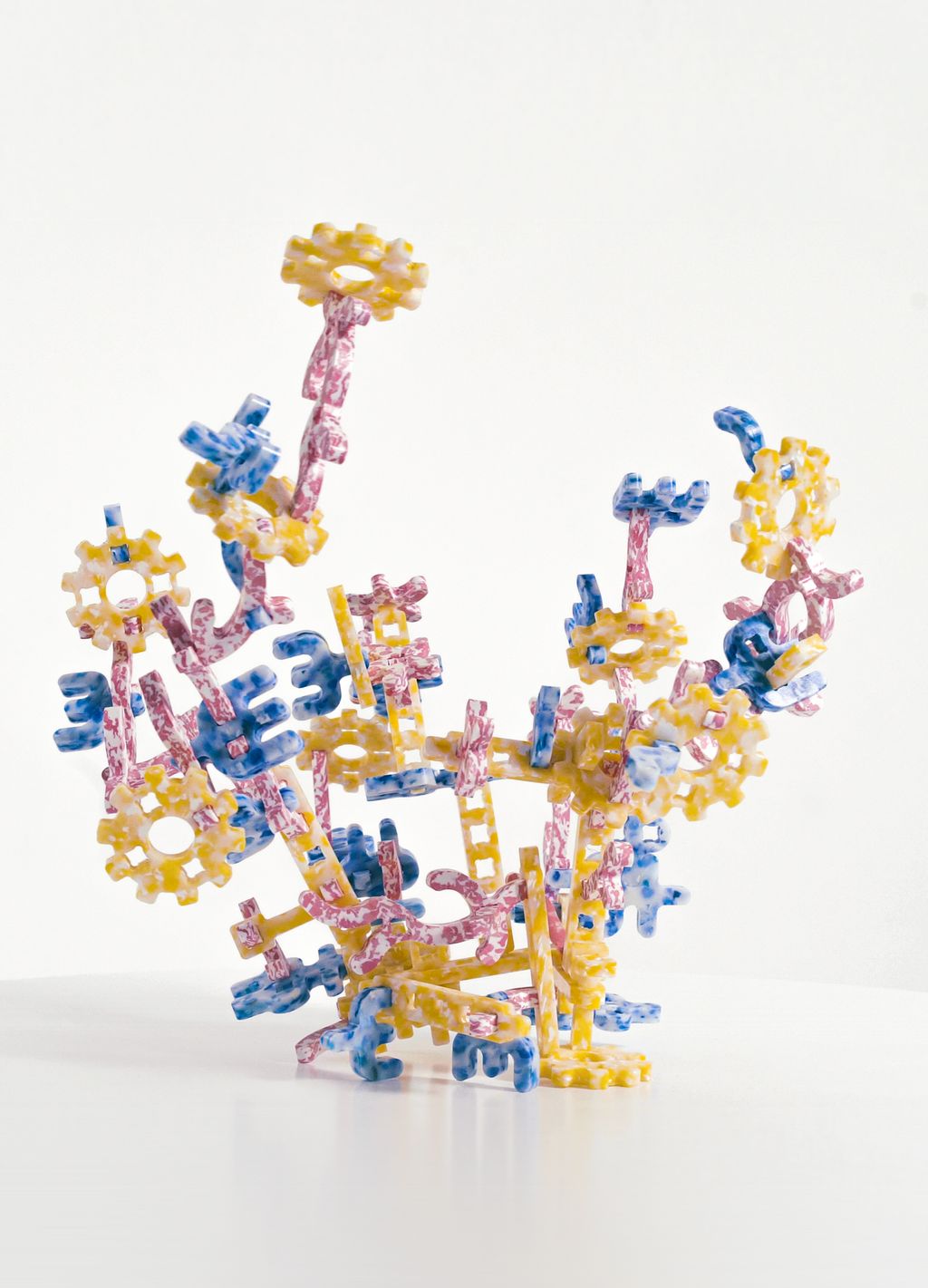
At the outset, Combo Toys had a business plan — and therefore a name, an artistic direction and sales objectives — which we gradually moved away from, to remain true to what drove us when we came up with the idea for this project: its social dimension. I am a sculptor. I have worked in publishing and I teach. All of these experiences, as well as becoming a parent, naturally led me towards creating not an object, but a full concept centred around limited-edition toys made in our workshops from recycled plastic. As the fruit of my collaborations with visual artists from the Belgian and international art scenes, these toys have enabled me to build bridges between users and the art world by inviting people, both adults and children, to embrace creativity, curiosity and imagination.
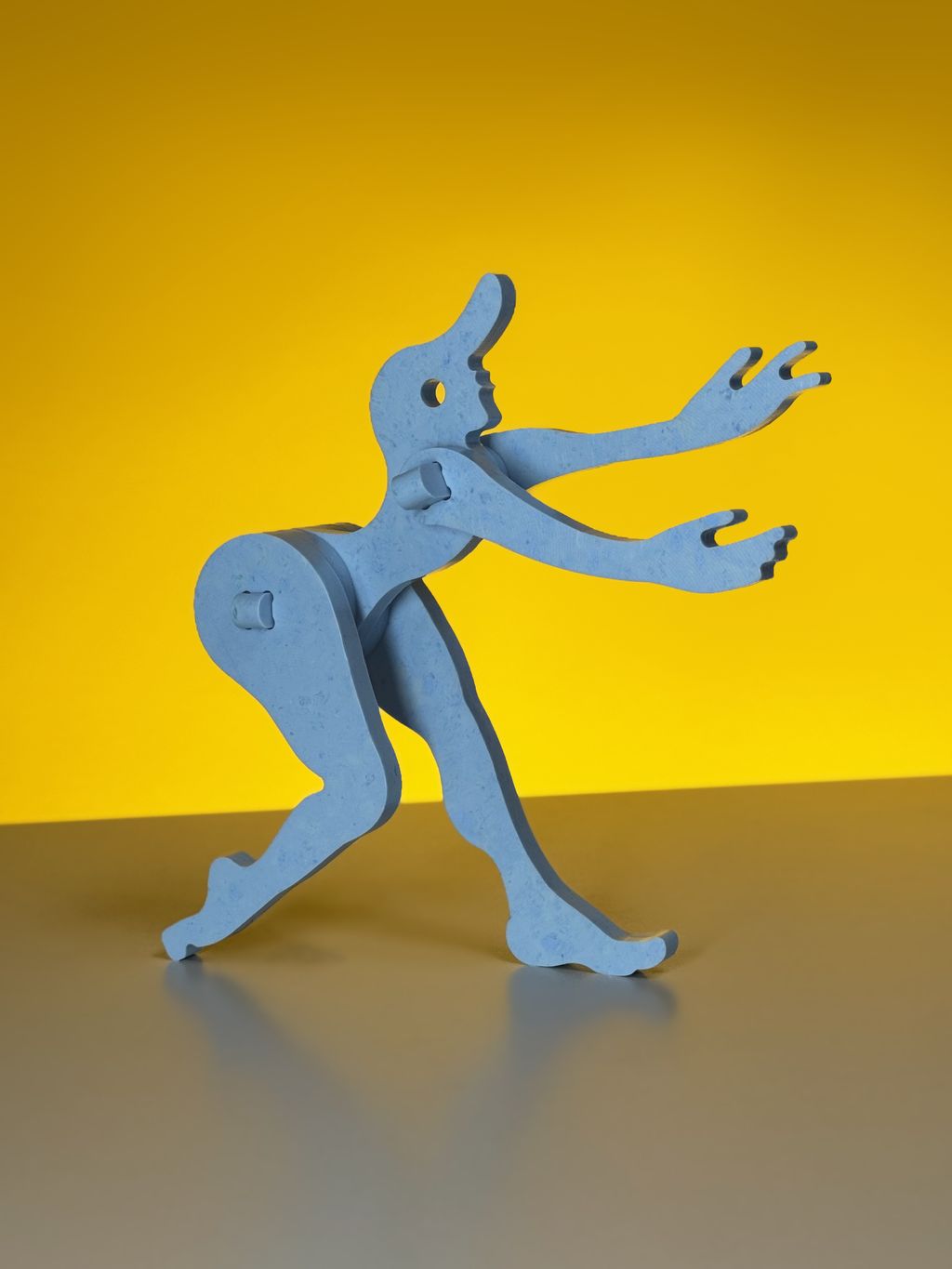
You have created several separate lines, including one called Signature, which gives the artists invited an opportunity to explore new forms of expression using the basic modules.
… But also enables users to get physically involved in the game. Combo Toys lets us explore the incredible depth of being human as well as our ability to follow new creative paths in joy, above all without any limitations.
The idea of social design as vector for communication is the focus of your approach. Tell us more.
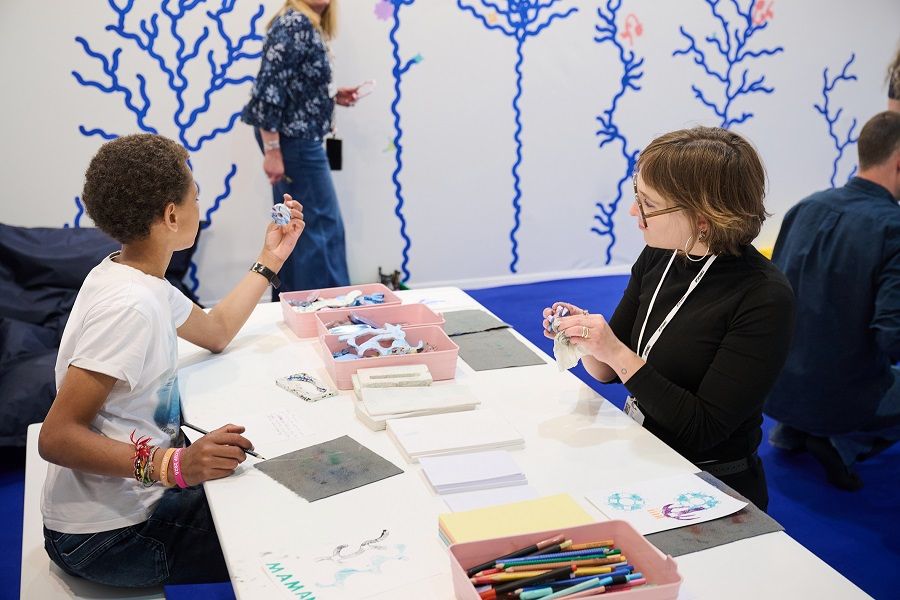
In my practice as a sculptor, I have always placed great importance on the principle of collective work; a piece of artwork that can bring people together. The first time I presented my play modules at Wiels, a contemporary art centre in Brussels, around a hundred children immediately embraced the concept. It’s proof that a toy that brings people together has relevance. My next aim is, in fact, to set up a workshop in Brussels: a workspace open to the public where children and adults will be able not only to play, but also to create their own module in half a day. They will therefore be creators as well as players.
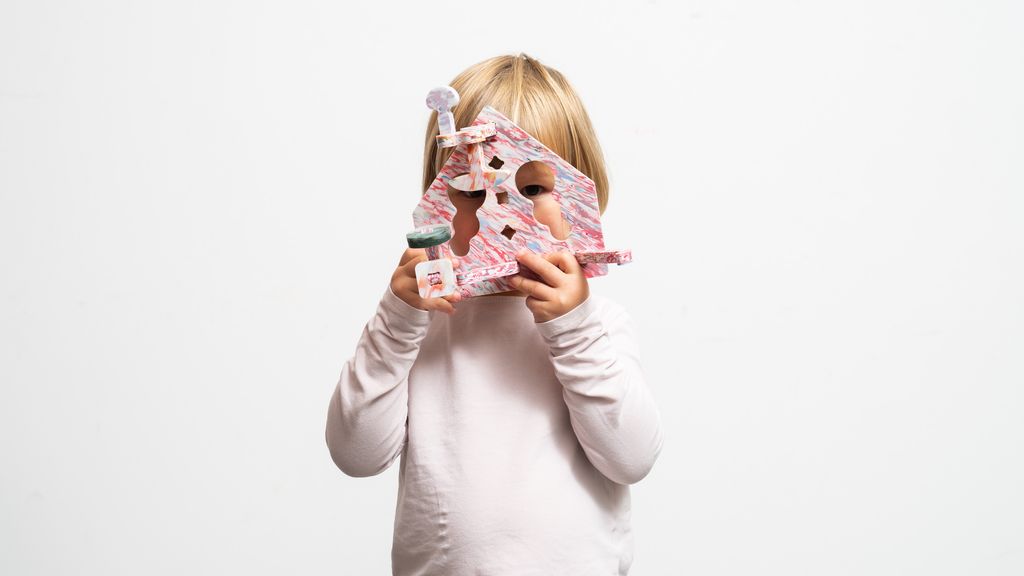
You say that the toy is merely a pretext for reaching different types of audiences and breaking down as many barriers as possible. What explains the fact that this approach immediately proved to be a ‘hit’?
With Combo Toys, I wanted to capitalise on an object that at first glance seems playful or innocuous, and bring it into another dimension. In a world dominated by the virtual, people need to reconnect physically with things. As a sculptor, I have always been frustrated by the fact that you cannot touch works of art in museums. With Combo Toys, I wanted to create a kind of sensual mechanism. The experience the user has is therefore crucial.
From the outset, you chose to move away from wood, a material wrongly considered to be highly ecological, in favour of recycled plastic.
The wood industry is indeed very opaque. There is no longer any noble timber in Europe. The logs are sent to China to be processed. As for plywood, it is made up of layers bonded together using glues and binders derived from petrochemicals. For this project, I therefore opted for recycled plastic; an idea suggested to me by two Belgian workshops specialising in this field, which have unfortunately since closed. A few months ago, I bought a machine that enables me to make my own plastic sheets. Everything is done from A to Z in our workshops: designing the object, digital printing, laser milling, polishing, packaging in screen-printed pouches made in Brussels and distribution.
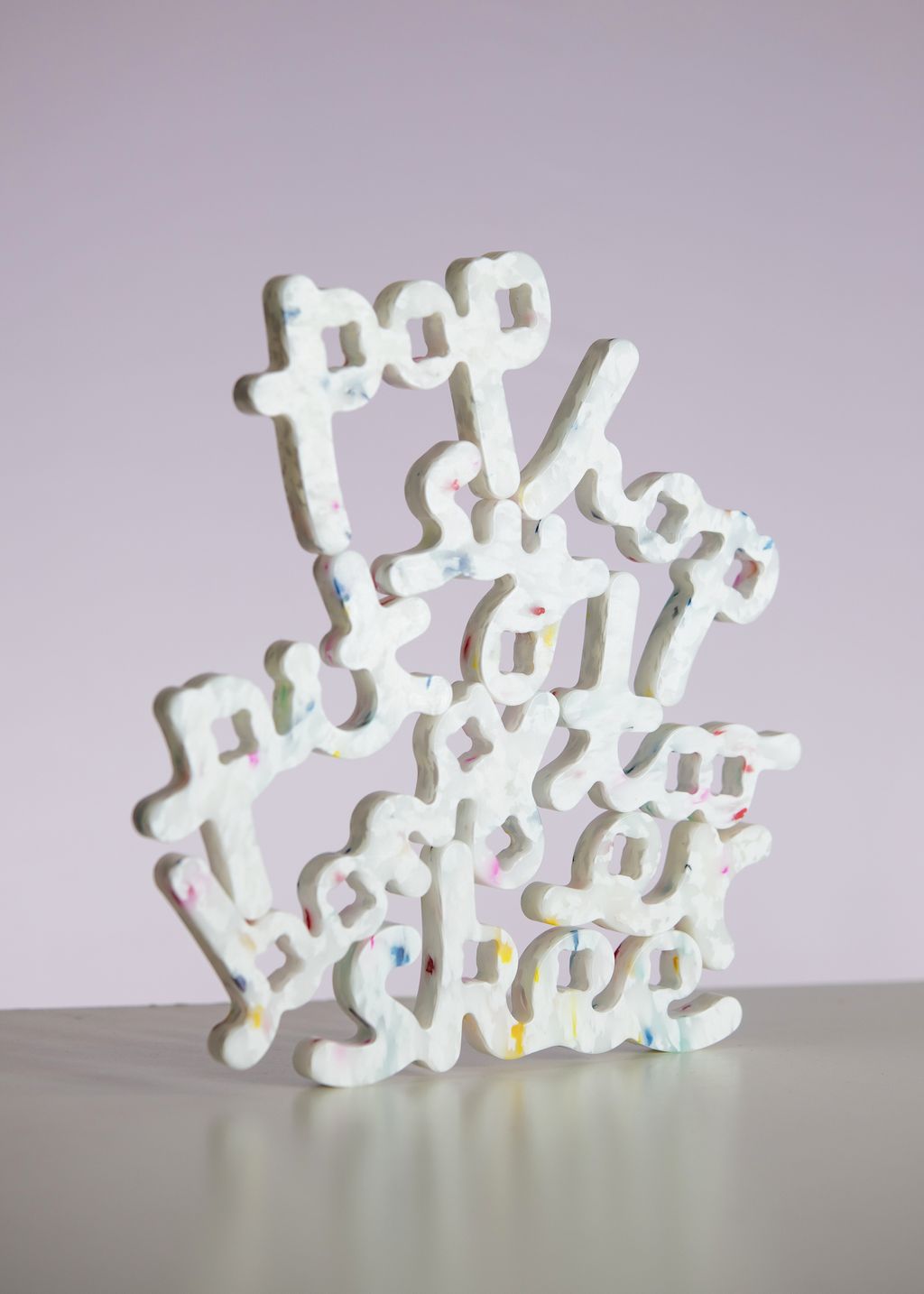
You distribute the various lines of Combo Toys through toy shops, museum shops (in Los Angeles, Paris, etc.) and at art and design fairs. But this autumn, thanks to WBDM, which has supported you since the project’s launch, you are now at the Design Museum in Ghent. A crowning achievement?
It is indeed recognition of the work that has been accomplished. The project grew very quickly, and the design world immediately opened its arms to us. We have collaborated with major figures in contemporary art such as Ryan Gander, but it is not so much a desire for renown as an artist that drives me. What interests me is the artists’ approach, as well as their desire to push the boundaries of the medium. The end result is less important than the process. This also explains why some editions are unsigned. It means that everyone can afford a Combo Toys piece.
For example, we produced a series of spinning tops developed with 18 figures from the Swiss art scene during an artists’ residency organised in Geneva; these included both emerging talents and established artists. Last August, during the sale of pieces from the Spinning Geneva project, the items by lesser-known artists proved just as popular as the others. This only serves to confirm the need to stop pigeonholing everything.