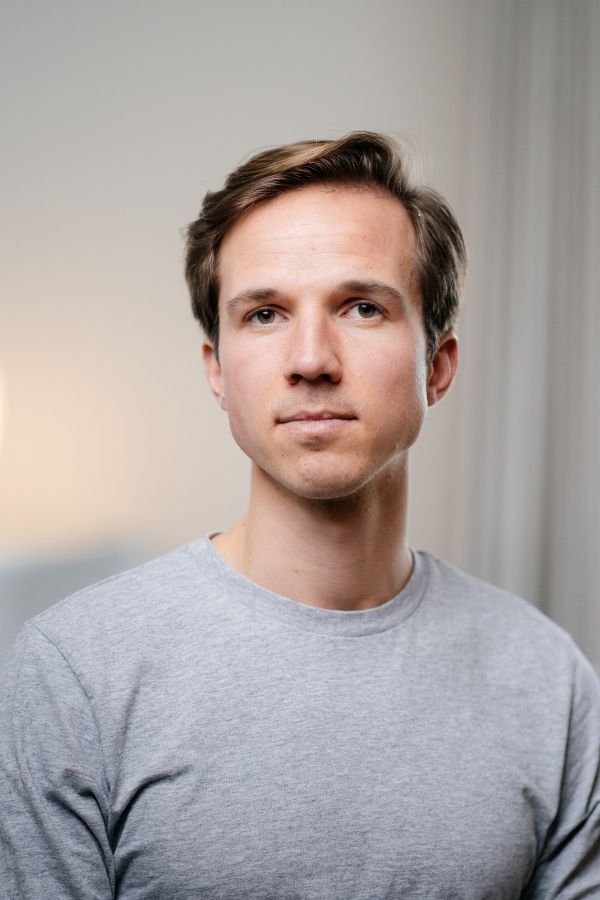
Industrial designer – a profession that cannot be improvised today – Julian Gamper stands out for his comprehensive vision, attentive to every stage, from pre-project to completion. He rightly defines himself as a true cornerstone, paving the way for design in many companies. We meet this thirty-something designer of German and Austrian origin, based in Wallonia, who is active in a wide range of fields, from sports to embedded technologies.
How would you describe your job?
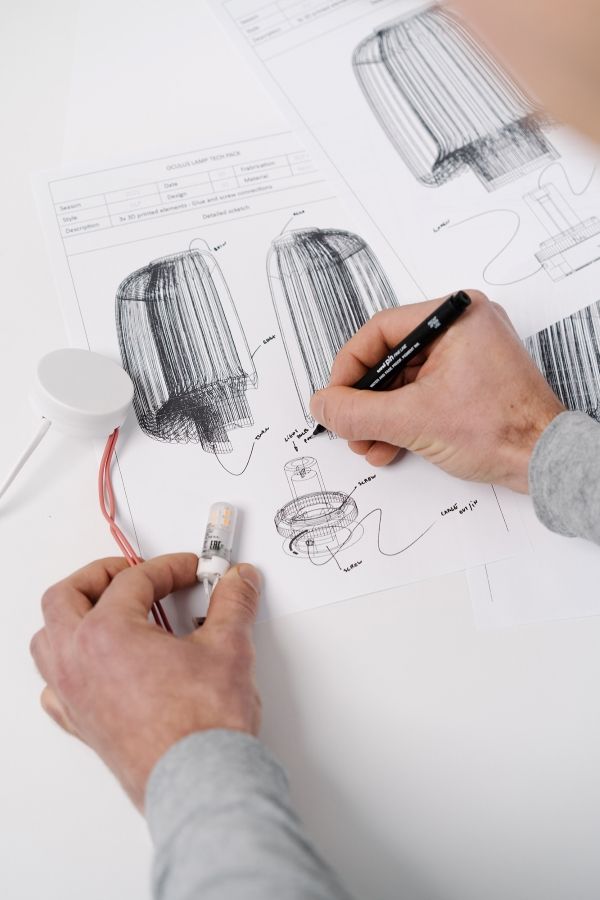
Being a designer is above all about getting to know people and interpreting what they want. Identifying an idea, giving it an image, designing it, producing it and then ensuring that its quality is in line with the initial expectations. Helping to launch a product with a campaign is also part of the service I offer. In 90% of cases, I support my clients from start to finish, and I stay in the loop for a while afterwards for other projects.
How do you work at your studio, Gamper Design?
I work both alone and with a network of service providers. My clients are start-ups, young companies and established firms looking to reinvent themselves. I like working with them directly, and my philosophy is based on listening and dialogue.
What projects are you working on?
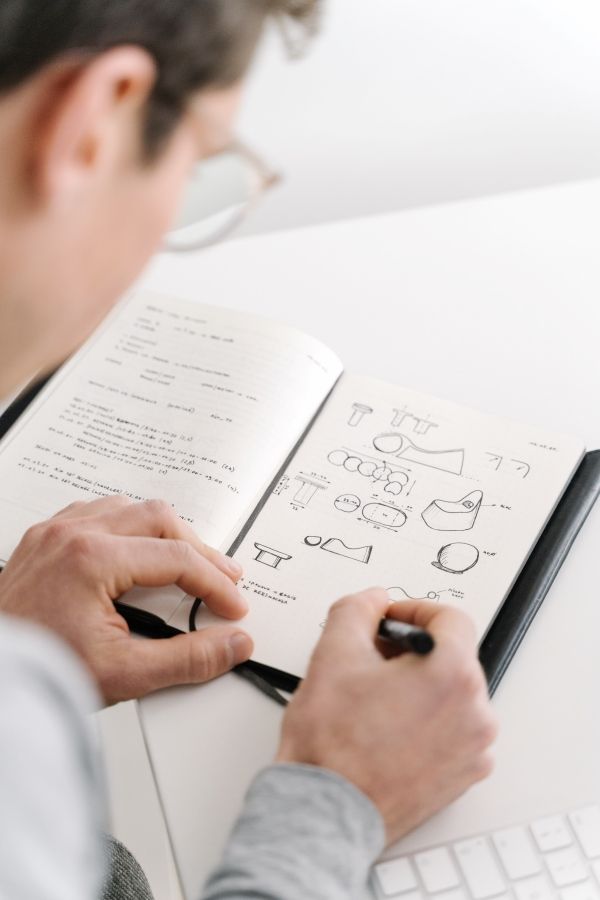
On projects in a variety of fields: currently, a bicycle for an Italian brand and a smart bracelet (with artificial intelligence) for a Belgian company. The latter first contacted me to design the hardware, and we then decided to create the accompanying software. Designing a harmonious product means thinking about a complete ecosystem, which extends to branding.
What is your ultimate inspiration in the history of design?
I have always admired Dieter Rams [1932-], for his philosophy of ultra-fluidity, where aesthetics derive from the functionality of the object. And being of German origin myself, I went to study at the University of Applied Arts in Vienna for five years.
What did you gain from your studies in industrial design under professors Paolo Piva and Stefan Diez?
Design reflects its era. As a designer and architect, Paolo Piva [1950-2017] is associated with the 1970s and 1980s (he worked for B&B Italia, editor’s note). These were eras when designers were easily given carte blanche. Creating bespoke, even radical designs was essential for him. Stefan Diez [1971-] (industrial designer active since the 2000s, editor’s note) is more focused on researching new technologies and creating niche products that are highly functional, but also emotional and affordable, which makes sense today.
What have you learned since you started out?
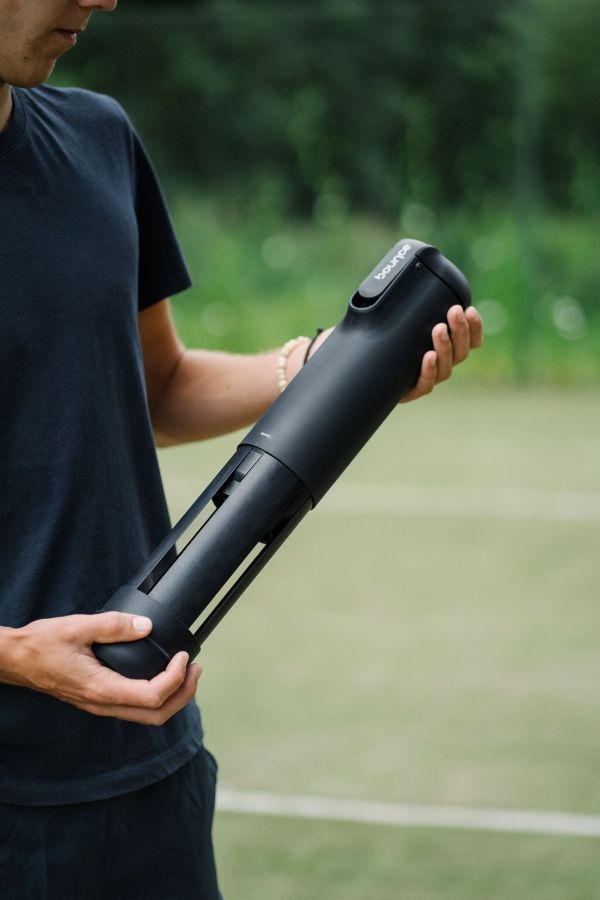
That you have to know how to make good use of constraints. For the Bounce Pro tennis ball pressuriser project, which I designed for the Belgian company Bounce Sport (specialising in sports equipment for tennis and padel), I wanted to make the assembly parts visible. This product is designed for the world of professional tennis and was developed with the Belgian design office Quimesis (Bounce, its first portable version, won the Red Dot Design Award in 2025, editor’s note).
What do you learn from your peers in the design world?
I often talk to designers about the relationships we have with our clients, our successes and our failures. With social media, designers are open and enjoy discussing topics that can sometimes be difficult to broach.
Part of your generation seems less inspired by industrial design. How do you explain this?
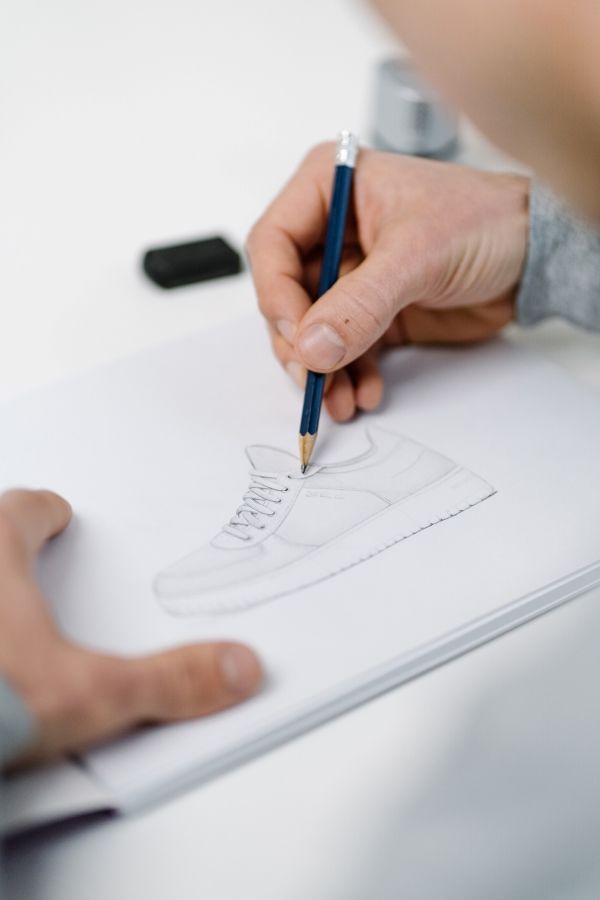
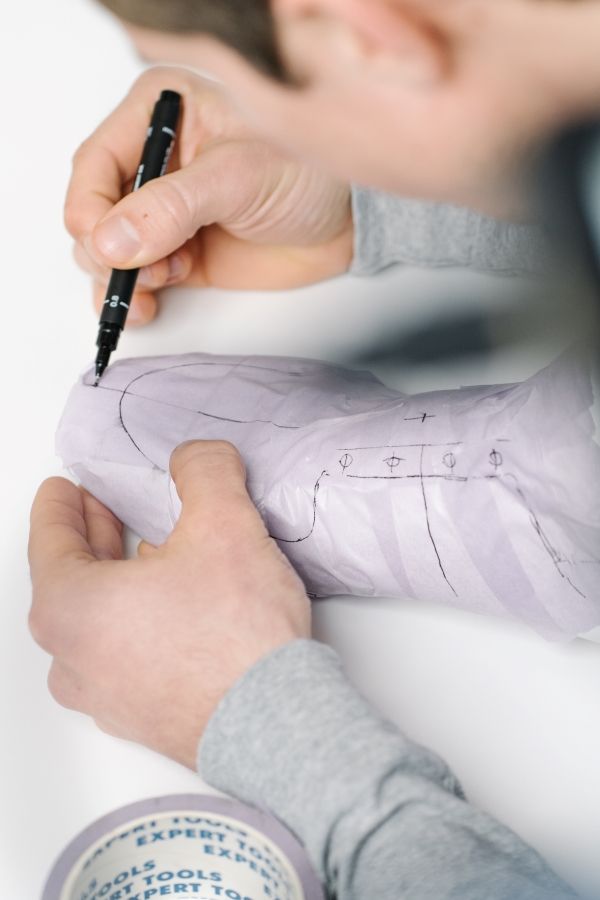
Before Covid, companies were investing more in new products. Nowadays, many young designers are also artists and/or craftspeople. They want to make pieces using their own methods and develop their own techniques… In my case, my work touches on very different fields, and that’s what inspires me. Lately, I’ve been working on a shoe project, and recently a connected letterbox for collecting medical samples, a dog muzzle and a carbon racing bike… But many of the people I studied with didn’t necessarily follow the design path and preferred to move on to other fields. It’s difficult to fully commit to this profession for economic reasons.
What does the job of industrial designer entail today?
For many, this job is one where a person helps a company make attractive products. It’s true that we often start with this objective for the client, and the client realises that the designer is involved in different phases of product development and takes on the role of a project manager, dealing with suppliers, engineers and various fields, such as nanotechnology or 3D textiles, for example. The industrial designer thus becomes key and has the ability to understand why a product may be viable and sustainable, what needs to be improved, and to suggest where technical and human investments should be made.
What does innovation mean to you?
Innovating does not necessarily mean creating new products. Innovation is about responding to needs that are sometimes invisible to the public or providing solutions through materials. In any case, it should not lead to overproduction.
How can we make a product last today?
I believe in ‘Less is more’ (Mies van der Rohe’s adage, editor’s note), but this is often a trap, requiring more effort to refine your thinking and come up with a product that, even if it only meets the needs of a certain group of people, can be improved and/or repaired to give it a second life.
You already have extensive experience (Electrolux in Stockholm, Adidas in China, etc.). How far could your versatility take you?
I would love to get involved in aerospace. I enjoy working with industry, interacting with engineering firms and learning about their processes.
Tell us about your project with the Belgian prototyping company Moviin.
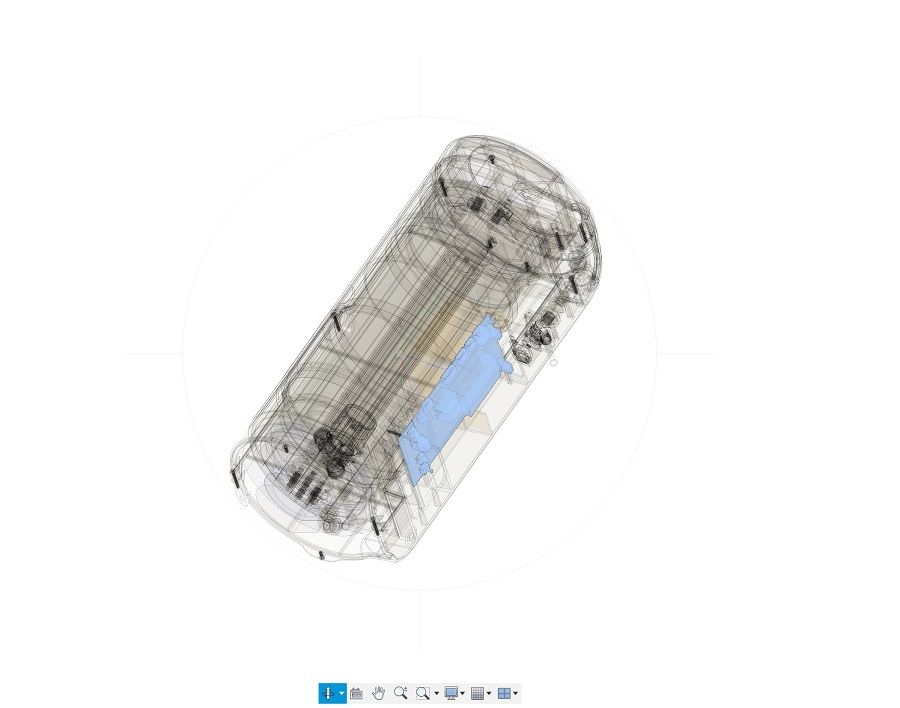
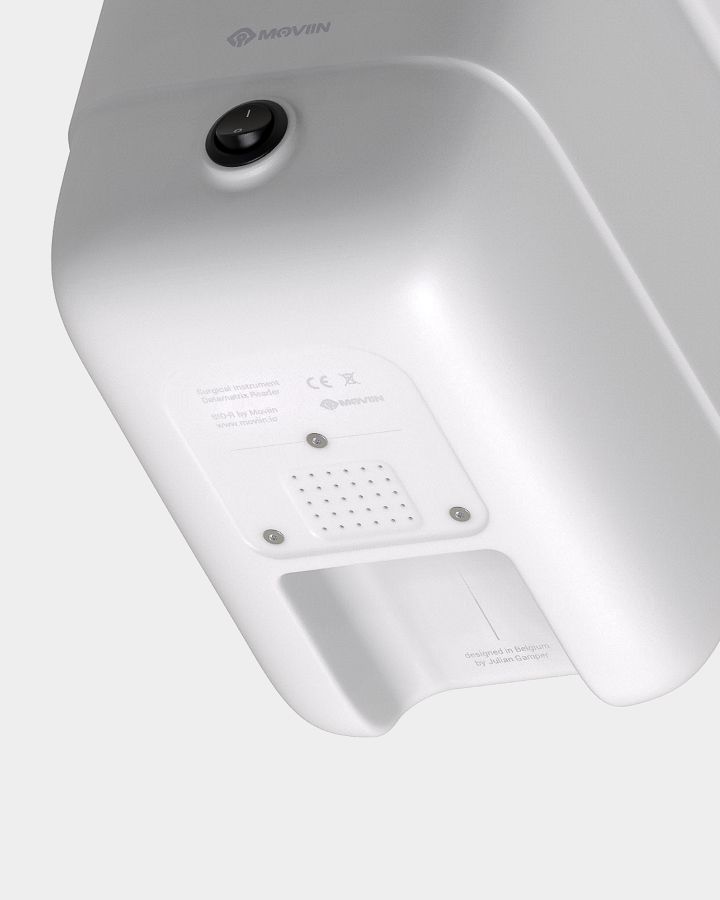
Moviin approached me to develop a proof of concept for Care-Nam, a functional prototype of the Datamatrix machine, which makes it ten times faster and easier to scan surgical instruments after sterilisation in hospital operations. This project was referred to me by Wallonie Design.
How do the medical and sports sectors you have worked for view you?
They are open to the role of industrial designers being important in their activities. These sectors are also less competitive than the furniture industry and are often pleasantly surprised by the structure we can bring to their projects.
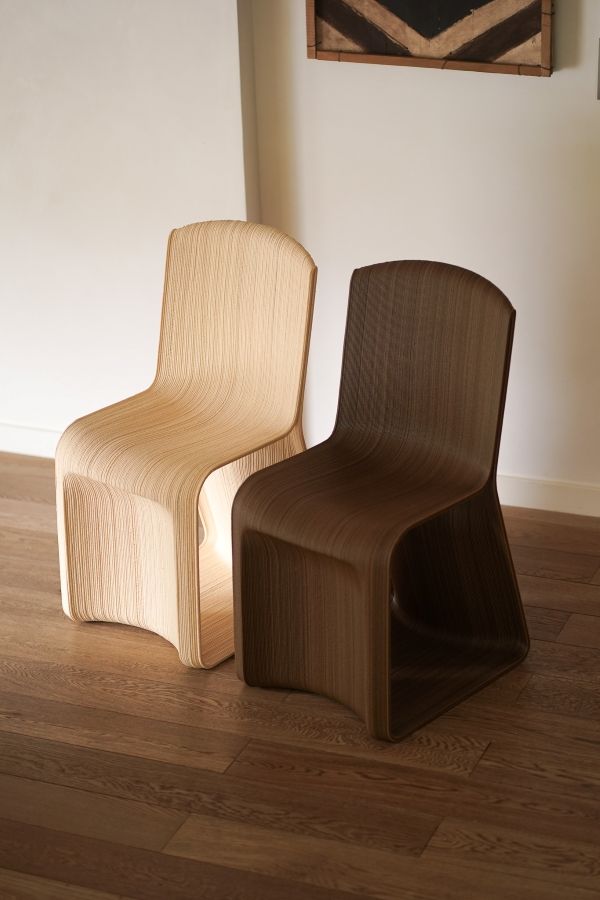
You have an e-shop selling your own creations. What does self-production bring you?
I manufacture and market some of my own creations, which are not industrial products and are worth bringing to life. I work with hemp and wood fibre for the Cordula chair, and with Iroko wood for the Pico stool. Self-production has become an important part of my work and is dedicated to private individuals. Experimenting on a daily basis to create products that can be used immediately is a great source of motivation.
What does the term ‘Belgian design’ mean to you?
International clients and greater proximity to the local industry. Being of Austrian-German nationality and having grown up in Belgium, I feel Belgian and part of Belgian design community when I am abroad.